
For procurement, comparing quotations is routine work. For monitoring systems such as CEMS or AQMS, the challenge lies in what is not written down: two quotations at different prices often cover different work.
Start from what has to be measured
Technical requirements come from permits and unit conditions, not from a catalog. For ambient air monitoring, Government Regulation (PP) No. 22 of 2021, Annex VII sets the national ambient air quality standards, which are the benchmark when ambient data is evaluated. For stack emissions, parameters follow the requirements that apply to your sector and unit.
Make sure every quotation lists the same parameters, the same number of measurement points, and a configuration suited to the flue gas conditions or monitoring location.
Eight things that should be written into a quotation
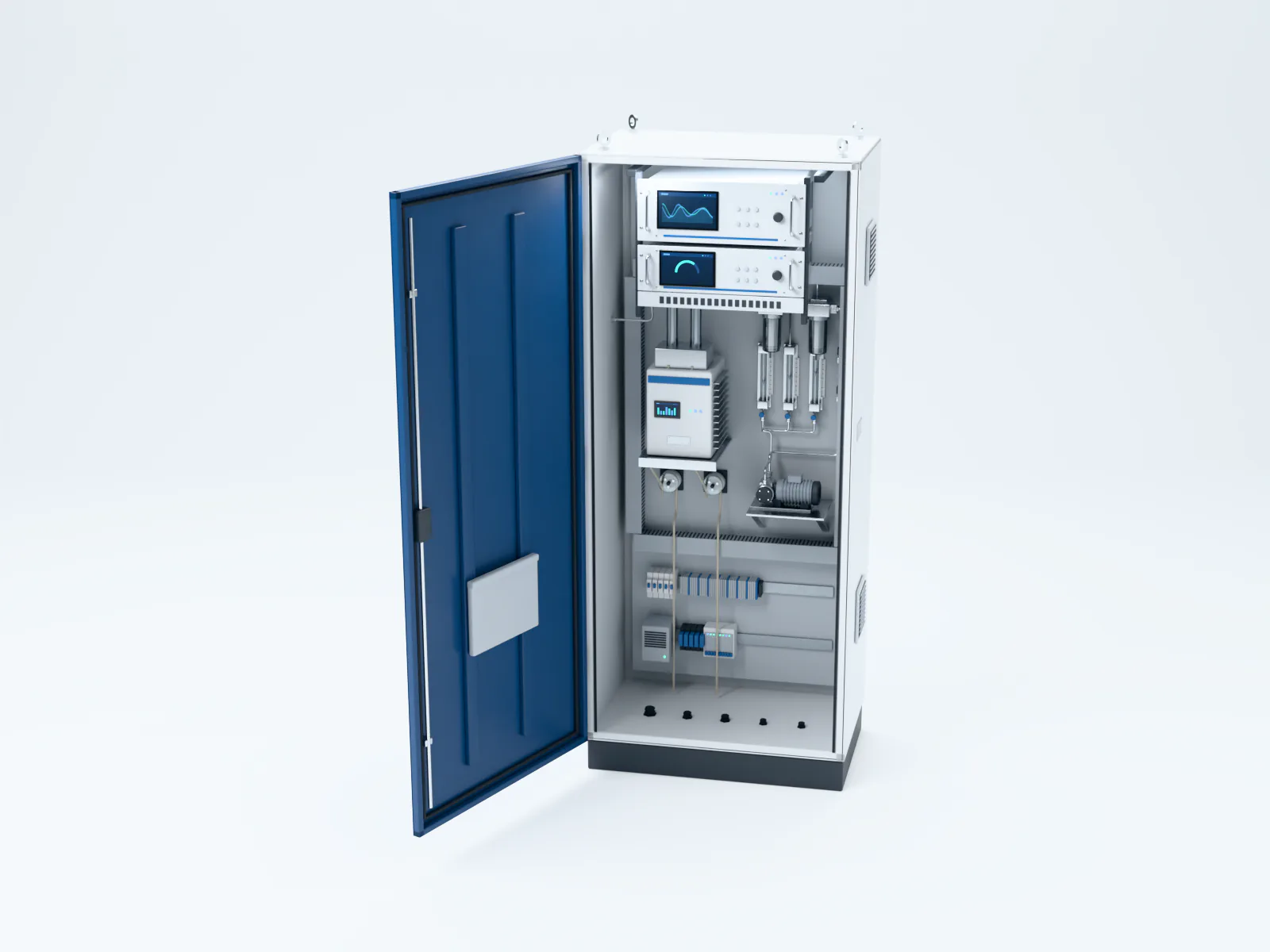
- Supply scope: analyzers, sampling system, shelter or cabinet, data logger, and DIS.
- Site survey and measurement point design.
- Mechanical and electrical installation, including the materials covered.
- Commissioning and handover documentation.
- Training for operators and engineers.
- Warranty period and what it covers.
- Maintenance, calibration, spare parts, and consumables after the warranty.
- Data and reporting support, including integration support where needed.
Compare the cost over the system’s life
The purchase price is only part of the cost. Consumables, standard gases for calibration, maintenance visits, and downtime when the system fails all shape the real cost. Ask for an estimate of annual operating cost, not just the unit price.
If the capital budget is limited, a rental scheme can be compared with buying. Under this scheme, equipment, maintenance, operation, and data support are paid as one package.
Ask about response, not just warranty
A warranty answers who pays when a component fails. Equally important questions:
- how long until a technician arrives on site;
- where spare parts are stocked;
- who can be contacted when data stops being sent.
The answers to these questions often matter more than the price difference between quotations.
Involve the technical team early
Procurement, HSE, and engineering read quotations from different angles. A joint assessment against the same scope list makes the comparison fairer, and reduces the risk of choosing a quotation that looks inexpensive at the start but costs more once the system is running.
The regulatory summary in this article is for information. For the obligations that apply to your unit, refer to the official text of PP No. 22 of 2021 and your unit’s environmental approval.